Starvation as Policy

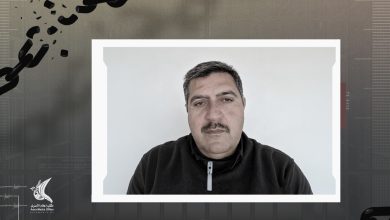
Ali al-Samoudi returned to Jenin today after months in Israeli detention, gaunt and visibly weakened. His face was drained of color after solitary confinement. He needed immediate medical care.
He spoke first about the prisoners still inside.
“The occupation is waging a starvation war the prisoner movement hasn’t seen since 1967,” al-Samoudi said. “Prisoners enter at normal weight and leave as skeletons. We lost our physical identity from the wasting. The food they give us wouldn’t feed a small child, and its quality is unfit for human consumption. We are staying alive by miracle.”
He called Israeli prisons “dark graves” and described detention as “a slaughterhouse for body and soul alike.” He said little about his own condition. What he wanted to talk about was what he had witnessed.
“I left prison, but I left behind thousands of hearts that die a hundred times a day. Prisoners are living the hardest phase in the history of the cause. Total isolation. Abuse that never stops. I saw prisoners screaming in pain without a single pill. Beatings are a morning and evening routine, and they target the prisoner’s dignity before his body.”
Al-Samoudi has reported from Jenin’s front lines for years and witnessed the killing of his colleague Shireen Abu Akleh. He says the occupation arrested him to bury the truth about what is happening in the city, and failed.
“The occupation tries to break the pen by breaking the body. In prison, I wrote with my heart what I couldn’t write with my pen. I heard screams of torture from the neighboring cells, and all I had was the hope that truth cannot be imprisoned forever. The occupation is deluded if it thinks cells will stop our message.”
“The body is frail, but the spirit never broke,” he said.
Al-Samoudi called the prisoners “a trust on all our necks” and urged international organizations to act against what he described as “a silent genocide,” with particular urgency for sick and wounded detainees.
“Their only message to me: don’t leave us alone. We are being killed slowly, and international silence slaughters us more than the jailer’s whips.”
“Only now can I breathe. But my breath will stay incomplete as long as one prisoner groans behind those walls. How long will the world stay silent while prisons are turned into human slaughterhouses?”