Punishment: “Public Service” Sentencing and the Criminalization of Palestinian Expression

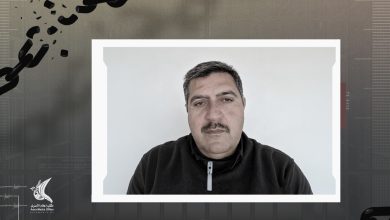
The occupation court in Nazareth handed Sheikh Kamal al-Khatib nine months of “public service” on July 21, 2026. It also fined him 15,000 shekels and added a 10-month prison term, suspended unless he commits a similar “offense.” The court convicted al-Khatib, deputy head of the Islamic Movement in the Palestinian interior, of incitement over his positions and statements on Al-Aqsa Mosque and the 2021 Dignity Uprising.
Israeli law calls the penalty avodot sherut, or “public service.” It means unpaid work inside Israeli institutions for up to nine months, the maximum the law allows. The assignments can be humiliating: cleaning toilets, or caring for elderly residents and changing their diapers. Others are heavy manual labor.
Alaa al-Souss, a journalist from Jerusalem, drew the same nine-month term in July 2026, along with a six-month suspended prison sentence and a fine. The charge was incitement. Al-Souss has herself been assaulted again and again in the courtyards of Al-Aqsa Mosque.
Lama Ghosheh, another journalist from Jerusalem, came up against the same policy in 2023. When her house arrest ended, the court handed her the maximum term of “public service.” “This is one more form of the humiliation and subjugation practiced against Jerusalemites,” she says of the ruling. Then came the wait. She did not know where she would be sent, or what she would be made to do there.
Ghosheh says the occupation pushes many Jerusalemites into work that degrades them. Cleaning toilets in Israeli institutions. Hauling animal feed. Caring for the elderly, changing their diapers. She calls it an attempt to sever Jerusalemites from their national identity and break them psychologically.
The occupation authorities accuse Ghosheh of incitement and of identifying with resistance groups. Their evidence is her journalism: her reporting on prisoners and on Jerusalem’s marginalized communities. Palestinian journalists face this repeatedly, targeted for their work and their national positions.
On paper, the penalty is an alternative to prison for cases that carry short sentences. Its use against Palestinians says otherwise. Courts reach for it most often in cases tied to freedom of opinion and expression, or to political and national activity. That pattern exposes it as a judicial tool with political ends. It punishes activists, journalists, and national leaders, and it tries to strip them of their standing as prisoners and detainees of freedom.
The humiliation is psychological as much as social. The occupation hands out tasks that cut at people’s dignity and national standing, and it takes their labor and their income for as long as the sentence runs.
Jerusalemite activists say the penalty does more than replace a prison term. They call it a tool for squeezing Palestinians and driving them into poverty, one that puts them to work for free inside the occupation’s own institutions. It feeds into a wider policy of pressure meant to push them out of Jerusalem. The courts also get to cast them as common criminals rather than admit they are targeted for their national positions.
“Public service” is forced labor. The occupation authorities use it to humiliate and impoverish Palestinians and to keep them under psychological pressure. It is one part of a punitive system directed at Palestinians, and above all at Jerusalemites and Palestinians of the interior. The aim is to break their will, to distort their struggle, and to chip away at their dignity and national identity.