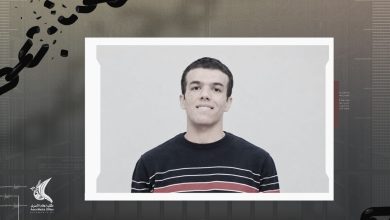
Detained on a Secret File: Mohammed Arab and the Silencing of Gaza’s Journalists

Mohammed Arab’s wife could not recognize her husband in the photograph. Neither could his children.
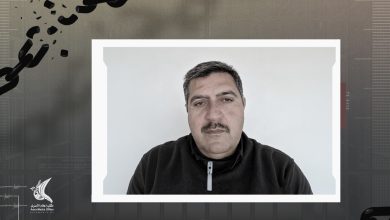
The picture leaked out of an Israeli courtroom on August 17, 2026. Mohammed Saber al-Abd Arab is 44. His hair has gone gray, his body looks spent, and torture, starvation, and medical neglect have changed his face so much that the people closest to him did not recognize him. Two and a half years in Israeli prisons did that.
The hearing was an appeal. Khaled Mahajna, a lawyer with the Commission of Detainees and Ex-Detainees Affairs, had filed to have him released. There was still no indictment against him, and his health was failing. The occupation court turned the appeal down.
His wife, speaking to the Prisoners’ Media Office, says she could not believe the man in the picture was her husband. “I did not know him after all this time, and his children did not recognize him either,” she says.
No written account of his detention carries what that image carries: the abuse, the torture, the starvation.
Mohammed has serious health problems, among them a cartilage injury he suffered while held at Sde Teiman. The sight in his left eye has been failing since occupation forces took his prescription glasses, and he urgently needs a new pair.
Israeli occupation forces arrested him on March 18, 2024, while he was reporting for Al-Araby TV inside the Al-Shifa Medical Complex in Gaza City. They had ordered everyone inside the hospital to surrender.
His wife remembers the last time they spoke. “The last time we saw Mohammed was at the start of the war. After that my children and I were displaced to the south of the Strip, and I only saw him through a short video call with a bad connection. We spoke to him while he was besieged inside the Shifa complex, only minutes before he turned himself in with the rest of those besieged.”
“I never imagined he would end up like this,” she says. “I was shocked when I saw how he looked. It was an extremely difficult moment. I did not know him.”
He was held first at Sde Teiman. From there Israel moved him to Ofer camp, then to Ramon prison during the “Toufan al-Ahrar” prisoner exchange deal, and finally to Naqab prison, where he is held today.
The occupation holds him as an “unlawful combatant,” citing a secret file. His administrative detention has been renewed four or five times, six months each time. The last renewal came on May 27, 2026.
After more than two years inside, his lawyers got some underwear through to him for the first time, and he saw his own face in a mirror after a long stretch without one.
During a lawyer’s visit in May 2026, Mohammed said he intended to go on hunger strike over his detention conditions. He ended the strike quickly. His health was breaking down, and conditions inside the prisons had grown far harsher after October 7, 2023. But his family did not find out he had stopped until months later.
Being a journalist made him a target. His detention left five children in the Gaza Strip living in extremely harsh conditions, without the only person who provided for them.
“Our situation is very difficult with Mohammed gone,” his wife says. “Things in Gaza are not simple, and the children need their father more than ever.”
Mohammed Arab is one of about 40 Palestinian journalists still held in occupation prisons. Their detention is part of a policy meant to silence free expression and target journalists. His story is a record of what Gaza’s prisoners face inside. The punishment there goes past the loss of freedom. It reaches for a man’s face, his health, and his dignity.