Majdi Salah: 78 Kilograms Lost and Two and a Half Years Without a Final Verdict
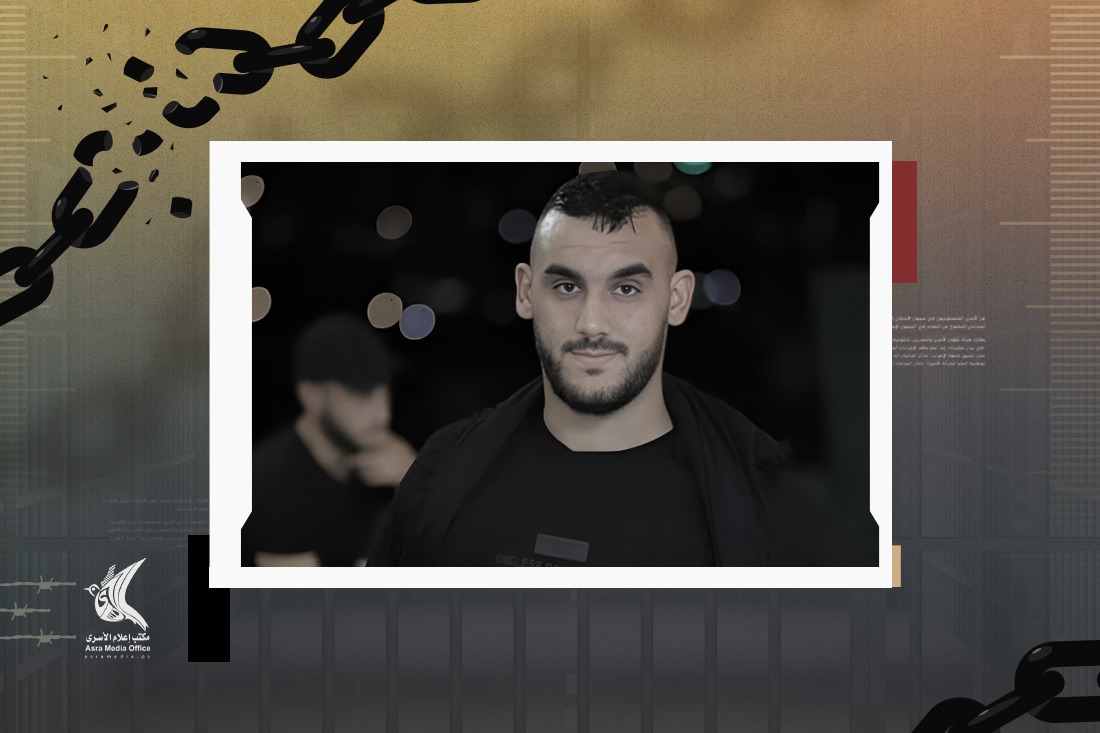
Majdi Ismail Salah weighed 128 kilograms when Israeli occupation forces arrested him on March 21, 2024. Today he weighs no more than 50. He has lost about 78 kilograms in prison.
More than two and a half years after his arrest, the 27-year-old from Bethlehem is still awaiting a final verdict, and detention has taken a heavy toll on his physical and mental health.
Majdi is among the victims of the repeated raids and crackdowns on prisoners in Ofer Prison. He has been beaten and abused many times, and his right foot was broken during one crackdown. He was also brutally assaulted after he led fellow prisoners in congregational prayer.
Majdi has had a disability in his right foot since birth. He also has asthma and sinus infections. The Israel Prison Service deliberately targets the parts of his body that are already hurt, attacking his injured foot again and again. It is a violation that compounds his suffering.
He has caught scabies four times during his detention, and each time he recovers, he is infected again. He receives no medical treatment, and his days have become one long wait in harsh conditions.
His family knows his health has reached a dangerous stage. They had hoped to see him at his last court hearing. The occupation had misled them into thinking he would be brought to court. He never appeared.
“What is being done to us is psychological warfare,” the family says.
The arrest itself left a lasting mark on the family. Israeli occupation forces stormed their home and tore it apart, just as they have done to hundreds of Palestinian homes in recent years.
“They destroyed the house and even broke the floor tiles. They left nothing untouched,” his family says.
Majdi had only just set up his own home. He had been married for five months and hoped for a settled life. His arrest changed everything. Since then, he has been trapped in court proceedings that are repeatedly postponed. His family is now waiting for his next hearing, hoping it will finally end the years of stalling and the suffering that comes with them.
This is not Majdi’s first arrest. He was detained in 2015 and spent a year in prison before his release on bail. But this detention is nothing like the last. Conditions inside the prisons have changed in ways never seen before, and his family’s home was raided again after his latest arrest.
Prisoners’ families never forget the first moments of an arrest, however many years pass. The pain stays fresh, as if the raid happened last night. The storming of the house, the destruction, the physical and psychological harm: none of it fades with time, and it only grows heavier, day after day.
Then a harder ordeal begins. Families must follow the prisoner’s case through a long legal process on the occupation’s terms and wear themselves out trying to learn what is happening to him inside. Visits have been cut off, and news is scarce. Since the genocidal war on Gaza began, released prisoners have been the only source of information about what goes on in the prisons. But many keep their accounts short, because the occupation has threatened to re-arrest them. They know that going back to prison means going back to a living hell.
Majdi’s family knows all of this well. They are one of hundreds of families enduring a wait with no end in sight. Hope rarely reaches them.
The nights still weigh heavily on his mother.
Every day, his wife stands at the window and watches the road, hoping Majdi will come home. The years of waiting have not killed their hope. But each day is harder than the last, as they wait for the end of a detention that has stolen years of Majdi’s life and his health, and deprived his family of the simplest things in life.