Starvation, Detention Without Charge, and the Death Penalty: Palestinian Prisoners After October 2023
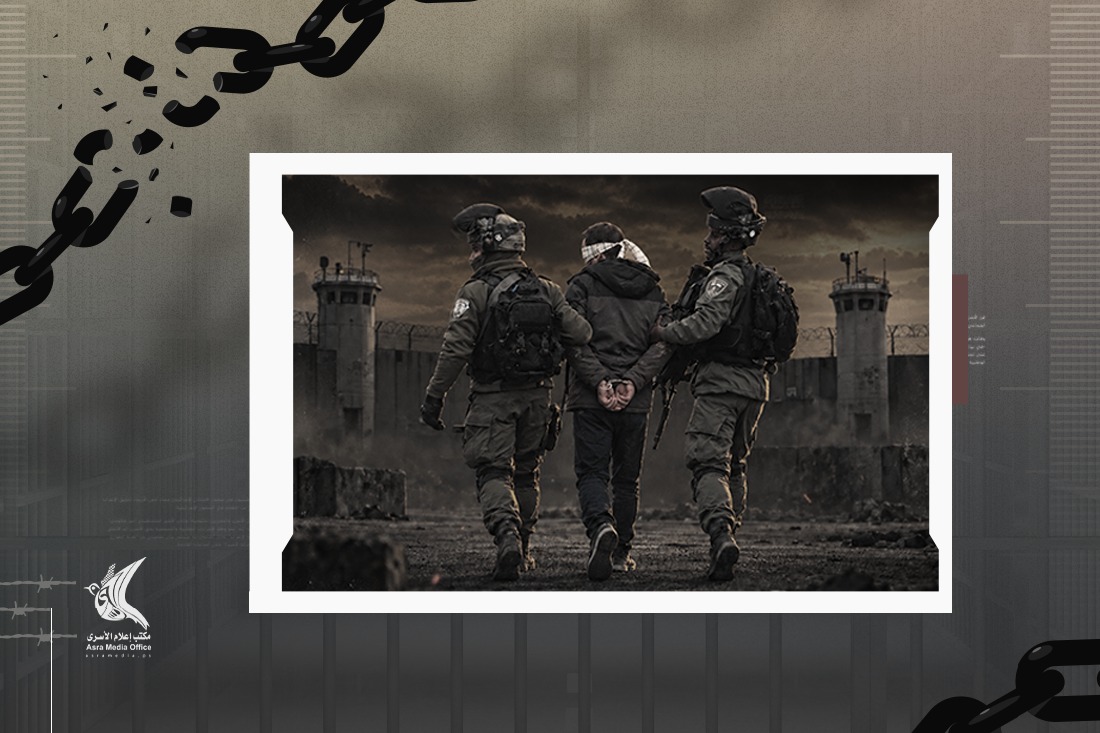
The past three years alone account for 28% of all the martyrs the prisoners’ movement has lost since 1967, the Prisoners’ Media Office says.
Only 92 of this period’s martyrs have been identified. Enforced disappearance still hides the fate of dozens of Gaza’s martyrs and detainees. The office released the figures to mark three years since the genocide in Gaza began, and since the genocide that followed it inside occupation prisons.
These crimes go back years. They did not begin on October 7, 2023. But once the genocide broke out, they escalated in both nature and scale to an unprecedented degree, in revenge for what happened in Gaza. The state of emergency inside occupation prisons remains in force until further notice.
For the prisoners’ movement, 2026 stands apart. In March 2026, the prisoner execution law was passed. The year has left wounds that have yet to heal among prisoners and detainees from the West Bank, Jerusalem, and the occupied 1948 territories. Gaza’s prisoners most of all. The fate of dozens of them is still unknown.
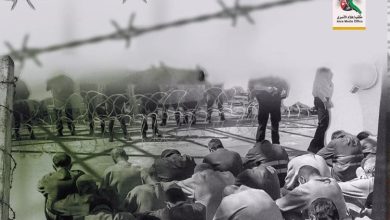
Over these three years, occupation prisons became the scene of widespread crimes. The war on Gaza ran alongside a second war inside the prisons, aimed in particular at the movement’s leading figures.
The occupation imposed a starvation policy, rationing prisoners’ food and lowering its quality. It waged a systematic war on their bodies through slow killing, executions, and physical and psychological torture. Prisoners faced sexual assault and medical neglect, and were denied treatment for chronic and serious illnesses. Prison authorities seized their basic necessities and personal belongings.
And every gain the prisoners’ movement had won through decades of struggle and long strikes was stripped away.
Prisoners by the Numbers
The occupation holds about 9,300 prisoners in its jails today. They include 118 prisoners serving life sentences, about 90 women, and about 350 children. About 3,101 are administrative detainees. Another 1,419, from Gaza, Lebanon, and Syria, are held under the label “unlawful combatants.”
About 329 prisoners have been martyred since 1967. Ninety-two were martyred after the genocide in Gaza began, and that counts only those whose identities the occupation and prisoner organizations have announced. That puts the past three years at about 28% of the movement’s martyrs. The share reflects the escalating targeting of prisoners, and the occupation’s attempts to eliminate the movement’s leading figures and the prisoner community as a whole.
The occupation still holds the bodies of 100 of the movement’s martyrs. Some were martyred before the genocide, some after.
Since the genocide began, the occupation has carried out about 26,000 arrests in the West Bank. In Gaza, detainees number in the thousands. Documenting their names and details there is extremely difficult, so the full scale of what is happening in the Strip, and of what happened during the war, remains unclear.
Over the same period, more than 800 women have been arrested or detained, and arrests of children in the West Bank reached about 2,000.
Sweeping Military Campaigns
These figures don’t fully capture daily life, especially in the West Bank, the office says. Villages, towns, and cities face sweeping raids almost every day, as do Jerusalem and the occupied 1948 territories. The occupation is stepping up what it calls “security activity” in West Bank cities and villages, aiming to destabilize Palestinian society and impose a new reality on the ground.
Every night, many villages wake to large-scale raids. Soldiers turn Palestinian homes into military posts, then bring in dozens of local residents, sometimes hundreds, and interrogate them one by one. The stated reason is to gather information and study Palestinian economic and social conditions. The interrogations also probe how people deal with settler attacks, and they impose the occupation’s presence as a fact of life.
Many of those interrogated picked up on these aims from the questions area officers asked them.
No figure can convey what the Palestinian public is going through, or the scale of the violations families suffer during night raids. Soldiers assault families and their children. They often cross every line, opening fire on homes with women and children inside. Many have been wounded. A number of young men have been martyred for the flimsiest of reasons.
What happens every day inside Palestinian homes is part of the picture these figures reflect. And the raids themselves changed radically in nature and method after the genocide in Gaza. Ready-made charges are now in wide use. Chief among them: “incitement” and “attacking settlers’ security.” The settler doing the attacking, on stolen Palestinian land, is cast as the victim.
The Execution Law
The prisoner execution law passed on March 30, 2026, and military courts and prosecutors now have the power to issue death sentences against prisoners.
No year in the history of the prisoners’ movement has been more dangerous for prisoners than this one, the office says. The law reflects the occupation’s escalating campaign of revenge against the Palestinian people. Neither human rights bodies nor the international community has done anything effective to deter it.
The law’s effects go beyond the act of passing it. First, it opens the way to executing the 118 prisoners serving life sentences, many of whom have already spent long years in occupation prisons. This is part of a revenge policy aimed at prisoners and their families.
The law also aims to weaken popular support for prisoners, especially as Itamar Ben-Gvir, the occupation government’s national security minister, threatens to execute those who carry out operations. He also threatens to demolish their homes, their families’ homes, and the homes of anyone the occupation claims is linked to those operations. Demolitions of prisoners’ homes have clearly escalated in recent years. The occupation blows up the homes or levels them with bulldozers as families watch.
It is collective punishment. It reaches past the prisoner to his family and the community around him.
“Unlawful Combatants” and Administrative Detention
As these policies continued, a new concept took hold after the genocide began, aimed at Gaza’s prisoners in particular: the “unlawful combatant.” The occupation adopted this classification in 2002. Its use peaked during the current genocide.
Today 1,419 detainees are held under this label and 3,101 under administrative detention, out of about 9,300 in occupation prisons. In essence, the classification resembles administrative detention, but it is applied specifically to Gaza’s prisoners. They are held without clear indictments, on so-called “secret evidence.” Some Gaza prisoners were moved into this form of detention after their actual detention terms ended.
Since the genocide began, the office says, administrative detention has reached numbers the prisoners’ movement has never recorded in all the years of the occupation.
The administrative detention of children and women has also climbed to dangerous levels. Children are taken from their homes and held on the basis of secret files, with no clear charges and no end date for their detention. Women prisoners and their families have years of their lives stolen, with no real legal guarantees.
Palestinians are now arrested on grounds that were not used this way before the genocide.
The occupation pursues young men over their social media posts, over stands they have taken in defense of the land, and over photos and files saved on their phones. All in the name of what it calls “security.”
“Incitement” has become a ready-made charge from the moment soldiers storm a home. Freed prisoners who spent long years inside are re-arrested on this charge. It is also used against women, including mothers, university students, and underage girls, even for expressing grief or mourning martyrs on their own social media pages.
The press has not been spared either: journalists are now among the most targeted groups, and a number released from prison have declined to speak about what they went through inside, fearing they would be pursued or arrested again.
Today, many Palestinian cities and villages brace for repeated night raids, part of a policy to impose a new reality. The pursuit reaches every Palestinian occasion and season, from weddings and mourning gatherings to the farming seasons and martyrs’ funerals. Every detail of daily life is now subject to surveillance, pursuit, and arrest.
Behind the figures, the office says, are human stories: families robbed of their basic rights, years of life wasted behind bars, bodies facing slow killing, torture, and neglect.
The office calls on human rights and humanitarian organizations to face up to their responsibilities in light of the crimes committed against prisoners over the past three years, and to act urgently to stop what is happening in occupation prisons. The International Committee of the Red Cross and human rights organizations are still barred from visiting. Visits by legal teams are restricted. Dozens of prisoners serving life sentences remain in isolation without justification. Women prisoners are held in isolation in Damon Prison.
Torture and abuse continue, against them and against every prisoner.