Families of Palestinian Prisoners Mark the Holiday Alone
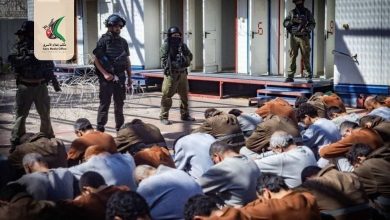
About 360 Palestinian children are spending Eid al-Adha inside the occupation’s prisons, taken from their school desks and stripped of any normal childhood. They are part of a far larger toll. Roughly 9,400 Palestinians have been arrested, leaving homes empty across the occupied territories, and every holiday since reopens the same wound.
The occupation was holding about 3,376 Palestinians in administrative detention as Eid al-Adha approached, spread across Megiddo, Ofer, and interrogation centers. Families had hoped the orders would expire and the men would come home before the holiday. About 84 named women are held in Damon prison, with others, beyond that count, still in interrogation centers. Eid al-Adha passed without them, like every holiday before it.
These figures leave out those the occupation labels “unlawful combatants” from Gaza, along with others from Lebanon and Syria. The occupation holds them in old and newly built detention centers. Their families have no word of them, no idea how the days are passing.
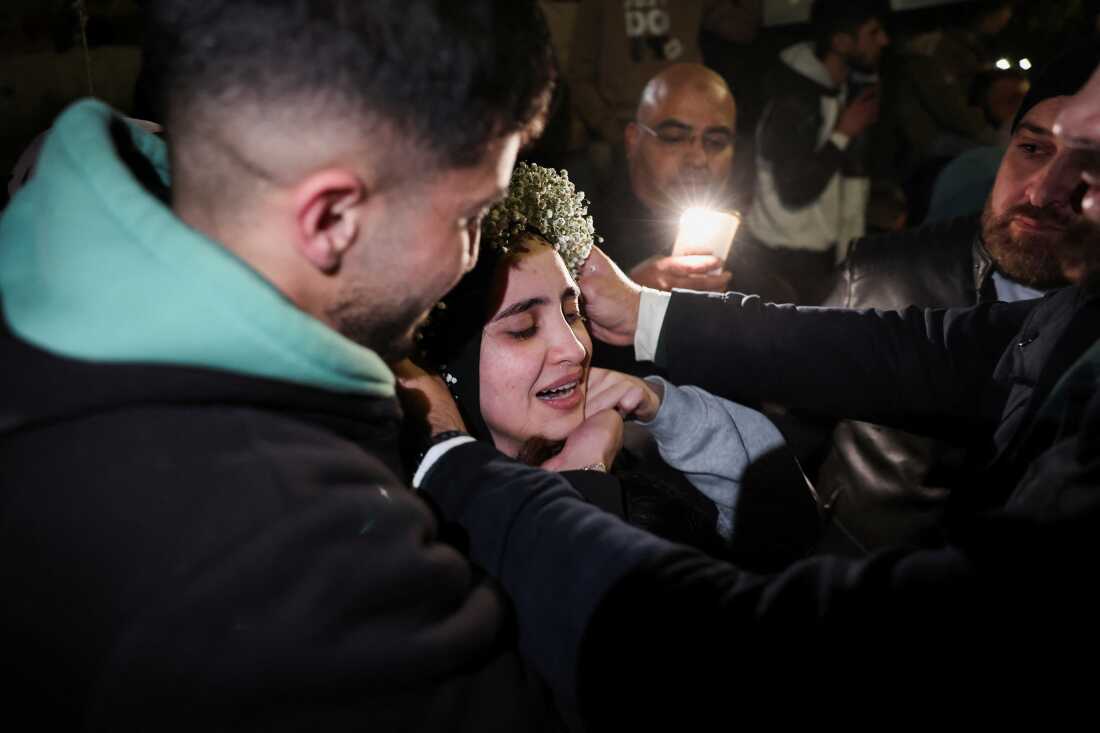
The wives carry most of it. Each Eid they try to steal a moment of joy for their children, to answer the small questions, to explain again why the father is not home, why the holiday is broken for a second year, a third, for some a fourth. Some children refuse to wear their new clothes. And some of these women are mothers of prisoners too, waiting for the release that would make a holiday real.
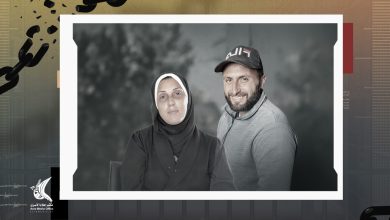
In Bethlehem, two children, Baraa and Ibaa, mark Eid without their father. Munir Muhammad al-Arouj, 41, has been held in administrative detention since September 6, 2025.
“On the day of Eid I see the grief in my children’s eyes more than on any other day,” their mother says. “I feel their father’s absence growing inside them year after year. The holiday that every child waits for with joy enters our house loaded with longing and pain.”
“My children don’t miss their father as a name,” she says. “They miss every detail of him. His voice on the morning of Eid. His laugh among them. The hand that used to hold theirs. The look of love and pride on his face when they put on their holiday clothes. My son stands for a long time in front of his father’s photograph, talking to him as if he were there, then falls silent, as if his small heart understood that the picture does not answer. Sometimes I watch him hide his tears and try to look strong, but in the end he is a child who only wants his father. My daughter asks the same question every Eid: why does every child have a father except us? I don’t know how a mother explains absence and oppression and waiting to a little girl. Sometimes she holds her father’s photo and falls asleep beside it, trying to make up for the real embrace she has been denied. Even their small joy in the holiday stays incomplete.”
“When my children see other children running with their fathers, I feel them break in silence,” she says. “They try to be happy for me, and I try to look strong for them, but the truth is our hearts are all worn out by this absence. The hardest moments come when I cannot make up for their father, because a father cannot be replaced. He is safety, support, the soul that gives life meaning. All I want, every Eid, is for him to come back, so my children can feel the real joy of the holiday once, without pain, without waiting.”
In Hebron, the family of Sheikh Rizq Abdullah al-Rajoub, 65, faces the holiday with almost no news of him. He has been held since June 12, 2023, and across earlier arrests he has spent a total of 32 years in the occupation’s prisons.
“In this arrest, my husband completes three straight years,” his wife says, “two of them in solitary confinement, split between Janot and Megiddo. He is in isolation at Megiddo now. A released prisoner told me my husband is in poor health, especially given the conditions inside. He already had stomach and joint pain. The man who came out and brought me news of him said he had changed completely because of the starvation policy, that even his appearance was different, and that guards beat him badly in a recent crackdown along with the other men. He needs medical care. They have given him nothing, not for his stomach, not for the headaches that keep coming.”
He can barely stand except to pray. He spends most of his time on the prison mat, when the guards leave the bedding at all. Of those 32 years, most passed in administrative detention and isolation, and word of him is scarce.
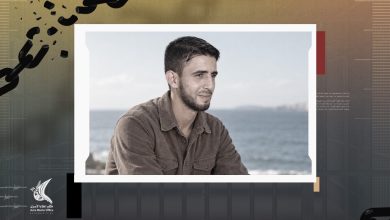
The pain runs deeper still. Another son, Muhammad al-Rajoub, 20, is held in Ofer prison, where he has now spent 18 months in administrative detention.
“Muhammad is a first-year university student, and he finished memorizing the Quran in captivity,” his mother says. “A released prisoner from his section told me he has scabies and migraines and has been given no treatment, that he was interrogated and beaten at the start of his arrest and left with bruises and cuts. We cannot send regular visits to check on him. Even the prisoners’ allowance has been cut off.”
The last visit she managed came in November. She learned then that he had been badly beaten. With the blackout on prisoners’ conditions and the ban on family visits, Eid brings her nothing.
“Holidays are another story,” she says. “I once sat with the family and said I wished there were no holidays at all. The house is empty. There is no life in it. I do not know how Eid passes, or even Ramadan. The days are very heavy. My husband was with us for only a handful of holidays. For Muhammad, this is the fourth Eid without him. I never stop thinking about them. Did they eat? Did they sleep? Do they have clothes, blankets? For me there are no occasions anymore, neither joy nor grief.”
While others prepare for Eid, she counts the hours until it comes and until it ends. “Eid for me is only the day our prisoners are freed,” she says. “In these blessed days I ask God for one thing, their release, and to bring me together with them soon.”
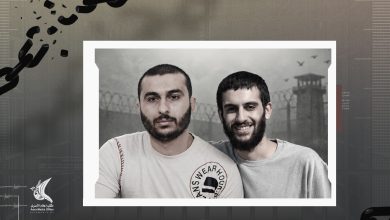
In Jenin camp, already bleeding, a mother marks Eid without three of her sons. Munir Ahmad Salama, 26, and his brother Nour al-Din, 23, were arrested on November 9, 2023. Fidaa Ahmad Salama, 18, was arrested on April 20, 2026. All three remain in detention.
“There is no Eid in this house,” she says. “Eid is a lump in the throat, it is pain. There is no holiday without them. The house is missing them, a great emptiness. For Munir and Nour al-Din, this is the sixth Eid away in prison. For Fidaa, the first without him. Even before Eid arrives I feel like I am choking, and the moment I hear the takbeers I start to cry, remembering how we all once were in this house together.”
Even so, the three did not forget their youngest sister. They sent word to their mother with a special greeting for her, their spoiled little one.
“It is hard to lose three sons from one house at Eid,” their mother says. “And outside the holidays too, our wounds have not closed. We remember them every moment, every second, at every occasion. Even when they are gone, they are here among us.”