Buried at Megiddo: The Long Silence Around Abdel Khaleq al-Natsheh
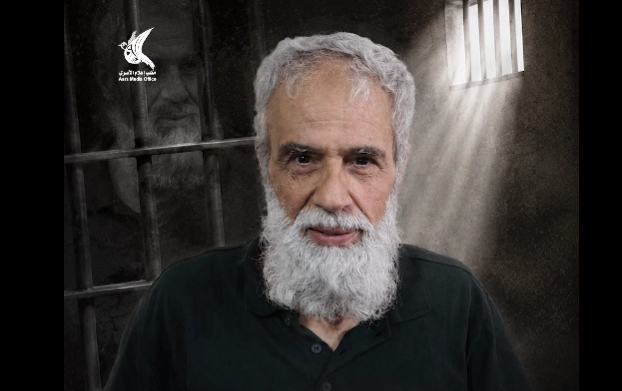
Abdel Khaleq al-Natsheh, 71, has spent more than 26 years inside Israeli prisons. Today he sits in isolation at Megiddo, his kidney disease and allergies untreated, cut off from the world.
Israel re-arrested him on March 11, 2025, and placed him in administrative detention. Two months ago it renewed that order for another six months. For most of the long stretch since, his family in Hebron heard nothing.
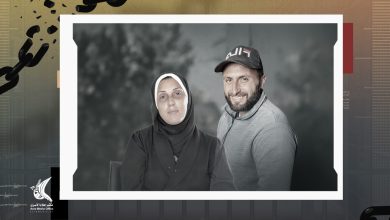
He was moved from Ofer prison to Megiddo isolation in April 2025. After that, word from him stopped, and word of him slowed to almost nothing. “For many, many months we knew nothing about him, until the lawyer visited him a few days ago,” his wife told the Prisoners’ Media Office.
What the lawyer brought back was not reassuring. But it was something to hold onto after the silence. For a prisoner’s family, a visit is a window, a way to keep going until the next word comes.
His wife lays out his condition. “My husband has spent more than 26 years in the occupation’s prisons, between actual sentences and administrative detention, and he suffers from several illnesses, most notably allergies, kidney problems, an inflamed prostate, high blood pressure, and chest and skin allergies.”
During his brief stretch of freedom he caught COVID-19, which hit him hard. He also underwent a catheterization of his heart and lungs. These conditions make his continued detention untenable. He has been brought before the prison doctor several times, his wife says, yet his kidneys and his allergies still go untreated.
She describes the waiting as brutal. “We live without him in worry and deprivation and longing. Things are extremely hard, the thinking never stops, the days weigh heavy on the soul, and there is no visit and no call to set our hearts at ease about him.”
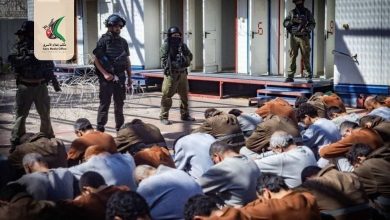
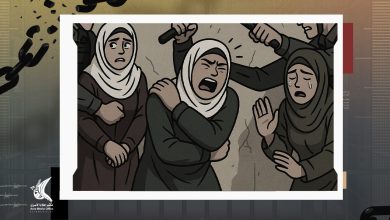
The family also learned that al-Natsheh and other prisoners faced beatings, abuse, and strip searches inside Megiddo isolation. The accounts coming out of the wing keep getting worse. Prisoners now call it, literally, a graveyard.
He is held there with ten other prisoners: Hassan Salameh, Bilal al-Barghouti, Abdullah al-Barghouti, Asem al-Barghouti, Jamal al-Hour, Ahed Abu Ghoulmeh, Muhannad Shreim, Muammar Shahrour, Rizq al-Rajoub, and Munadel Infeiat. These men are held in isolation under a continuing state of emergency inside the prisons, with everything that comes with it: a starvation policy, medical neglect, and the denial of care suited to their ages and their health.
Qusai Marei walked out of Megiddo isolation after time spent among these same men. He came out with a broken hand, battered ribs, and a body that could barely walk beside his family. His message was plain. The prisoners in this wing live something close to hell.
Al-Natsheh’s detention began in 1984 and has run through the years since, more than 26 of them inside the occupation’s prisons, ten of them consecutive. Israel demolished his home in 2002. He was among those expelled to Marj al-Zuhour in 1991. He holds a bachelor’s degree in Prophetic Hadith from the Islamic University in Medina and a master’s in jurisprudence and legislation from An-Najah University. A man of such learning and such patience had earned rest and peace of mind. Instead he has lived an unending ordeal, year after year.