Testimony from Nafha Prison: Mustafa al-Awadia’s First Letter Since His Detention
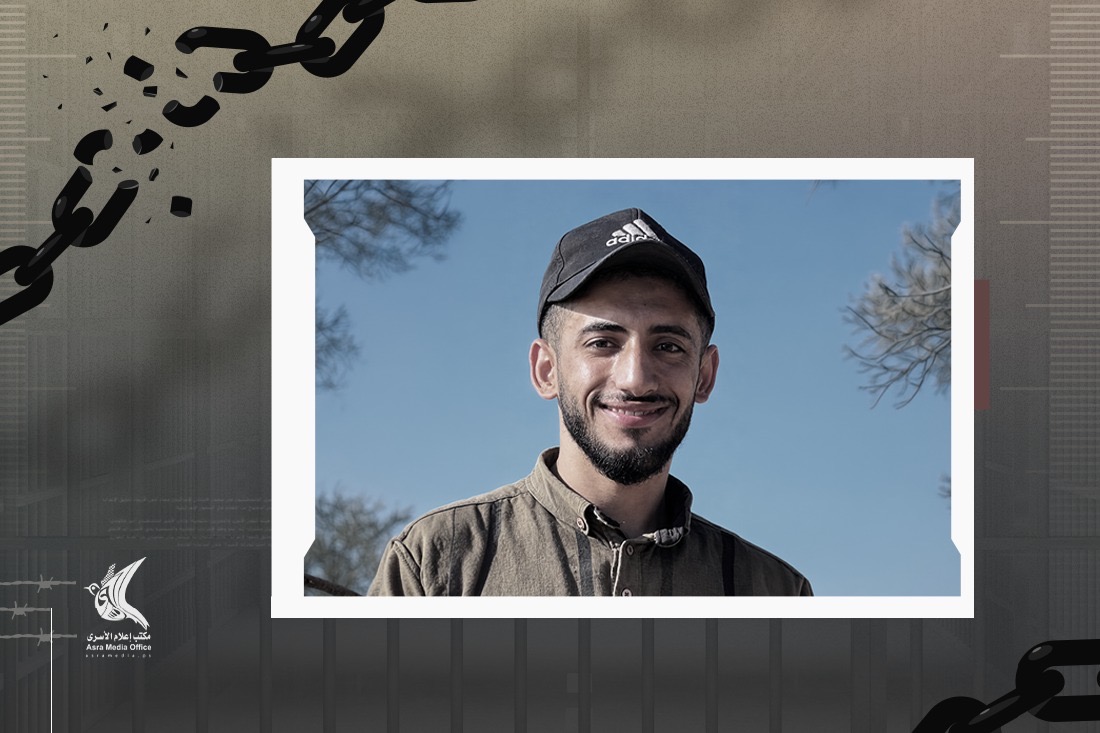
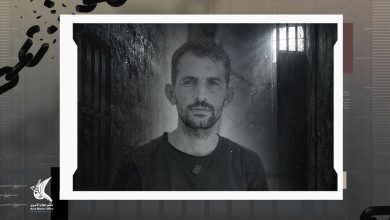
Mustafa al-Awadia knew he would be attacked once his lawyer’s visit was over. That detail comes from the first letter his family has received from him since Israeli occupation forces detained him nearly three years ago. The lawyer brought it out after visiting him in Israel’s Nafha prison. The letter describes the conditions he is held in and doubles as testimony about what prisoners live through inside.
Prisoners there are beaten, Mustafa says in the account his family has relayed.
He describes a severe food shortage. Rations are so small that prisoners save their breakfast, lunch, and dinner and eat them together as a single meal. Sometimes all they get is a little jam and some packs of rice and dry chickpeas. So they pool whatever they are given to make enough for one meal.
Mustafa has lost about 10 kilograms since his arrest. His gums and teeth are failing him, and he has a skin disease he calls “scabies.” He asked for medical care, but nobody had answered by the time he sent the letter. Prisoners are going without the care they need.
Occupation forces detained Mustafa on December 10, 2023, while besieging the Awni al-Harthani School north of Gaza City. From that day on, his family heard nothing. They turned to lawyers to find out where he was being held, but received conflicting information placing him in either Ofer prison or Nafha.
The lawyer’s visit gave the family their first direct word of him since his arrest. She met with Mustafa and carried his message to them.
The letter was painful to receive, the family says. What it revealed about his detention was only part of the pain. It also brought news of deaths in the family that Mustafa had not known about. In the letter, he sent greetings to his mother, his wife, and his sister. Then, through the lawyer, he learned that his brother, his mother-in-law, and two of his paternal uncles had been martyred in the war. He took the news with patience and acceptance of God’s will.
In prison, he has begun memorizing the Quran to help him stay patient and steadfast in the face of his suffering.
His uncle, the journalist Mahmoud al-Awadia, relayed the letter’s contents. He says it describes far more than Mustafa’s own case. It reflects what a large number of Palestinian prisoners are living through in Israeli prisons. He is calling on Palestinian and international institutions and human rights bodies to monitor the prisoners’ conditions and bring their suffering to light.
The letter has reassured his family, after three years without him, that Mustafa is alive, and it exposes part of what prisoners face inside Nafha: starvation, repression, and medical neglect. His family is still waiting to learn more about his conditions and his health.