“Save Us Before You Lose Us”: Israa Khmaiseh on the Women She Left in “the Grave”
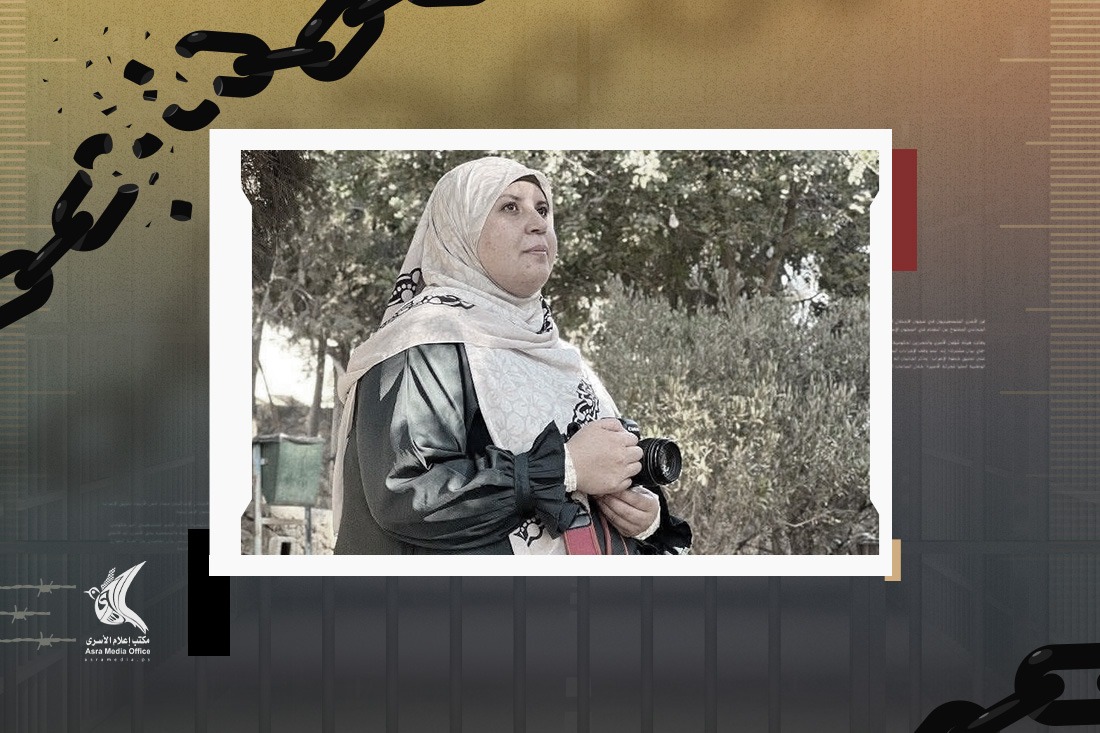
Israa Ashraf Khmaiseh walked out of Damon prison last Thursday after nine months and asked for two things. To hold her child. To run a brush through her hair.
Not a meal. Not a trip to make up for what she lost. Not her own bed. The Palestinian journalist had spent nine months without so much as a hairbrush.
At the prison gate she would not call it the end of her detention. She called it a new birth after a slow death.
“We were born again… we were living in a grave.”
One line for nine months of isolation and deprivation. Khmaiseh, 30, a photographer and graphic designer, left about 100 Palestinian women prisoners behind her in the same conditions. She carried one message out with her: “Save us before you lose us.”
Arrested over a post
A large unit of Israeli occupation forces raided her family’s home in Taffuh, west of Hebron, at dawn on October 11, 2025, and arrested her. The charge came later: “incitement” on social media. Occupation authorities have used that charge widely since October 2023 to go after Palestinians for what they post online.
Nine months in Damon followed. Interrogation. Solitary confinement.
“We didn’t know what time it was”
Inside, Khmaiseh says, the world cuts out. Time goes missing the way life does.
“We don’t hear news about the world, you don’t even know what time it is.”
She looked for the sun and found bars and metal wire. No clock. No night turning into day. A sealed grave, she says.
When a hairbrush becomes a dream
Deprivation did not stop at freedom. It reached down into the smallest details of the day, the ones that carry a person’s dignity.
The prison administration confiscated the women’s colored prayer clothes and handed out brown uniforms. Guards took the hair ties the women had made from scraps of cloth.
“I wanted to comb my hair with a brush… nine months, I didn’t put a brush in my hair.”
In front of a mirror after her release, she barely recognized her own face. Then she held her child and whispered to him: “I came out of the grave.”
Food that wouldn’t feed a child
Three spoonfuls of rice. Some spoiled vegetables. Less than 200 milliliters of soup. That was the meal.
“If you put this food in front of a small child, he wouldn’t agree to eat it.”
Medical treatment, summer clothes, a hijab: each one meant complaint after complaint and, eventually, the courts. The prison administration ignored the most basic rights of the women it held.
Punished over a piece of cloth
Repression units stormed the cells at night over what Khmaiseh calls trivial reasons. A string of prayer beads the women had made from cloth. A piece of cardboard they used against the summer heat. Guards called them a security risk.
One room held 12 to 14 women. Punishment was collective, and it ran for weeks. One time it was a pill found under a cabinet.
Freedom, the only demand
What changed most over those months, Khmaiseh says, is the way she looks at life. Everyone who met her after her release asked what food she was craving, what she wanted. Her answer stayed the same: “I don’t want anything from this world.”
The women she left behind want one thing. To go back to their families.
“I left behind 90 women prisoners, each one has a family and a dream… one wants to go back to her children, one to her mother and father, one to her university and her work… they all want their smile back.”
A message from behind bars
Khmaiseh walked out of Damon. A large part of her stayed behind the iron doors with the women still waiting for freedom.
No political statement came out with her, no long speech. One human message, carrying what Palestinian women live through inside Israeli prisons and their fear of being forgotten before they are freed:
“Save us… before you lose us.”