Al-Damon Imprisons Childhood: Four Girls Behind Bars
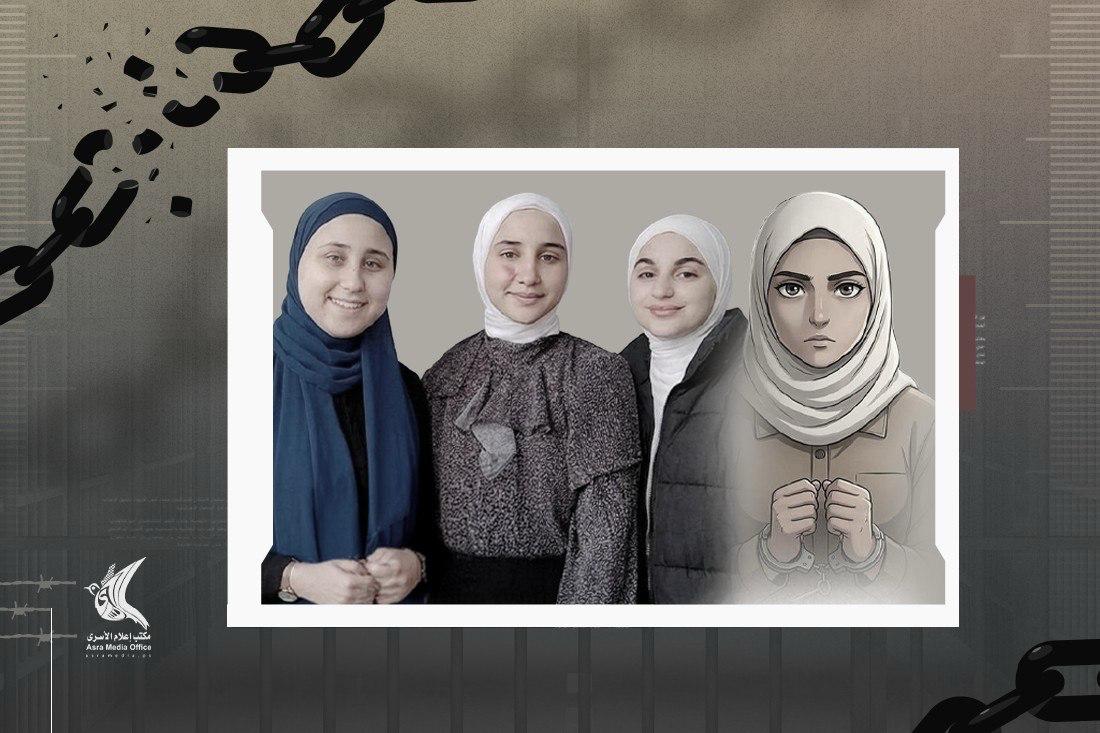
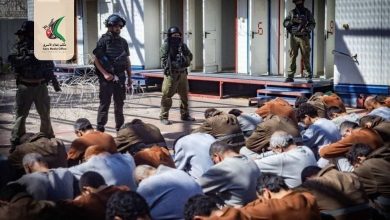
Four Palestinian girls are held inside Al-Damon prison, among roughly 94 women prisoners, and all four have been kept from sitting their school exams. The Prisoners’ Media Office says they face harsh repression and abuse under the state of emergency that Israeli prison authorities imposed across the prisons after October 7. That emergency stripped away the gains the prisoners’ movement had won over the years, first among them the right to keep studying and to earn academic certificates from inside prison.
When the occupation arrests a girl from her home, it does not take her freedom alone. It tears away her childhood and forces her eyes open, too early, onto a world of prisons and repression. It robs her of her schooling. It leaves scars in her memory, and questions that stay with her long after she walks free and returns to her family.
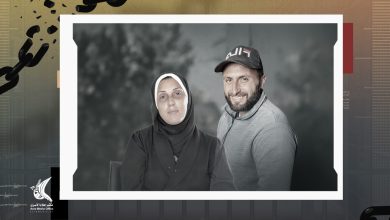
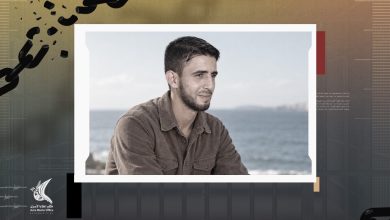
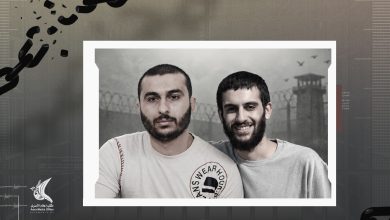
Ola, Nada, Hana, and Sally. Four stories that share the same pain and differ in the details. They were taken from Tubas, Hebron, and Ramallah to interrogation centers, then to Al-Damon prison, where their childhood was made to grasp the meaning of captivity before it had run its course. Three of them are still held before trial. The fourth is held under renewed administrative detention.
Sally Mohammed Sadaqa, 18, from the village of Al-Midya west of Ramallah, and Hana Naim Hammad, 18, from Al-Arroub camp north of Hebron, have both been reclassified by the prison administration as having aged out of childhood and moved out of the minors’ room. Both are still counted as minors under Palestinian law and under the international conventions on the rights of the child.
Israeli forces arrested Sally on January 5, 2025, at a military checkpoint. She spent 36 days in the Moskobiya interrogation center, cut off from the world, from fresh air and sunlight, after guards beat her while moving her there. She remains in detention today, facing one hearing after another with no verdict.
For a year and seven months, Sally has lived inside a loop of postponed hearings, her family never knowing when the next session will come. She should have been sitting with her classmates in the high school matriculation exam hall today. The arrest cut short her eleventh-grade year and kept her from those exams. Sally was studying sciences and dreamed of becoming a doctor. A hearing set for early last June was then canceled over the security situation and pushed to a date no one has been given.
Hana Naim Hammad’s story runs parallel to Sally’s. Israeli forces arrested her at her home on June 9, 2025, then moved her to administrative detention. On June 2, 2026, they renewed that detention for a fourth time, for four months.
Hana was in the eleventh grade when she was arrested. She lost the rest of her school year and her chance to sit the matriculation exams. The prison administration now places her outside the category of minors, though the law still counts her as a child.
Room 12 holds two more girls: Ola Abdel Nasser Qtaishat, 16, and Nada Iyad Bani Odeh, 17, both from the town of Tammun in Tubas governorate. Both have faced harsh conditions before trial and repeated hearings since their arrest.
Ola is the youngest prisoner in Al-Damon. Israeli forces arrested her on May 24, 2026. She has appeared at three hearings, and the last was pushed to July 28, 2026. Her family fears more and more for her mental state and is demanding she be moved to the rooms holding the women prisoners, after she and Nada were left alone in their room and placed in isolation.
The night before her arrest, Ola went to sleep expecting to wake for her English exam at school. She wakes now to the sound of raids and repression, stripped of school, of books, of pens, of exam papers.
Nada Bani Odeh was arrested on February 12, 2026, after she mourned her brother, the martyr Wadih Bani Odeh, who was killed on May 15, 2025.
Nada was a top student in the humanities track, first in her class, dreaming of ranking first in her whole governorate. The arrest became a wall across that dream. As the occupation officer told her mother, “There’s no matriculation this year.” She was denied her matriculation exams.
Nada spent four days in the settlement of Ariel before being moved to Al-Damon prison. Since then she has faced repeated hearings, some nine of them postponed, and she is still waiting for new ones while her dreams hang behind bars.
Nada, Ola, Sally, and Hana. Four girls among roughly 360 Palestinian children held in the occupation’s prisons.
These children were not stripped of their schooling alone. They were stripped of their childhood and of any normal life. As the arrest campaigns against women and children widen, these stories can repeat in every Palestinian city and village, the suffering of childhood becoming a scene that plays out with the same pain, even as the names and the places change.