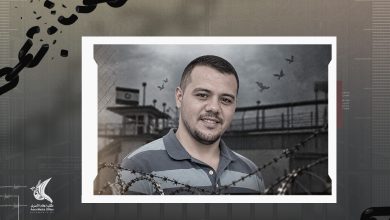
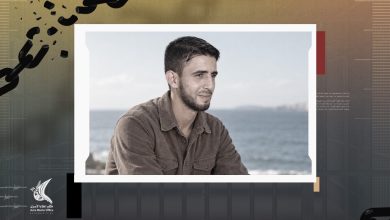
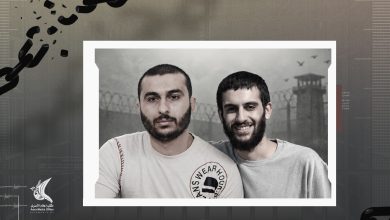
“Slow Killing”: Mujahid Bani Mufleh and the Crimes That Follow Release
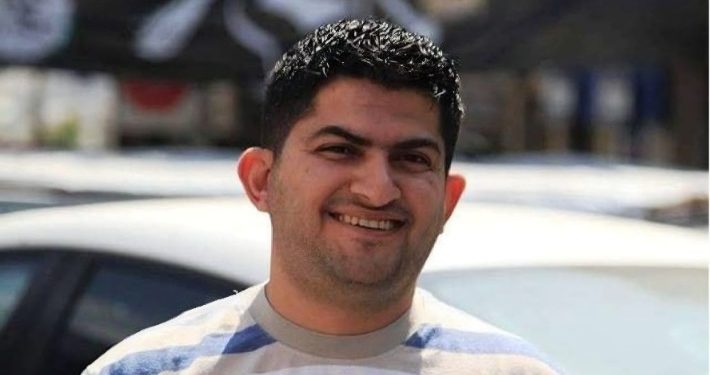
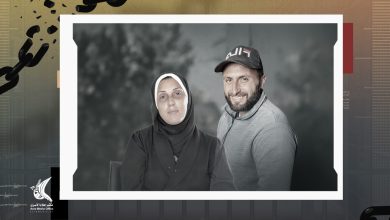
The family of journalist Mujahid Bani Mufleh, from the town of Beita south of Nablus, had barely caught their breath in joy at his release from the occupation’s prisons when, less than three days later, they found themselves facing a new nightmare: their son fighting for his life in the intensive care unit. What appeared to be a moment of freedom was, in truth, nothing more than a brief reprieve before his exhausted body collapsed from within.
At dawn on Thursday, Mujahid was rushed to hospital after losing consciousness. It was discovered that he had suffered severe brain hemorrhage, necessitating urgent and complex surgical intervention to save his life. He remains under intensive medical observation in the critical care unit.
From the very first moment of his release, Mujahid was not well. He appeared pale, severely fatigued, and had lost considerable weight. He suffered from intense headaches and constant exhaustion. He tried to reassure his family with a weary smile, but his body told another story: the story of a prisoner who left detention carrying within him the effects of torture, neglect, and starvation, like a ticking bomb awaiting the moment of detonation.
Medical sources have drawn a clear connection between the brain hemorrhage he suffered and the repeated physical trauma and severe malnutrition he endured during his detention, leaving his health so fragile that any complications could place him on the brink of death.
Mujahid’s case does not stand as an isolated incident but opens a window onto a broader pattern of systematic targeting of Palestinian prisoners, particularly journalists. Since the onset of the war of extermination, the occupation’s prisons have transformed into places designed not merely to deprive individuals of liberty, but to slowly destroy the body. More than two hundred journalists have been detained during this period; many have emerged with broken bodies and burdened souls, in a clear attempt to shatter the Palestinian narrative and silence those who document the crime.
Mujahid’s family affirms that the occupation released him fully aware that he faced serious health risks. One family member recounts bitterly that Mujahid returned with a depleted body: “He tried to appear strong, but his eyes betrayed the nights of beatings, sleep deprivation, and food denial. It did not take long for him to collapse; everything he endured inside the prison had been working silently within him.”
For its part, the Prisoners’ Media Office confirms that what happened to journalist Mujahid Bani Mufleh was not a sudden medical emergency but rather the direct result of a systematic policy pursued by the occupation’s prison administration, built upon torture, medical neglect, and starvation, followed by the release of prisoners in critical health conditions.
The Office emphasises that this practice constitutes a form of “deferred execution” or “slow killing,” whereby the prisoner is left to face his fate after his body has been completely drained. The Office holds the occupation fully and directly responsible for Mujahid’s life and for any deterioration that may occur in his health condition.
The case of Mujahid Bani Mufleh is not an exception but a renewed alarm confirming that the occupation’s prisons are no longer mere places of detention; they have transformed into temporary graves, from which prisoners emerge either as martyrs or carrying within their bodies the seeds of their deferred death.