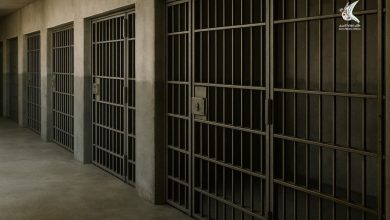
“Bosta”: A Journey of Torment Between Prisons and Courts
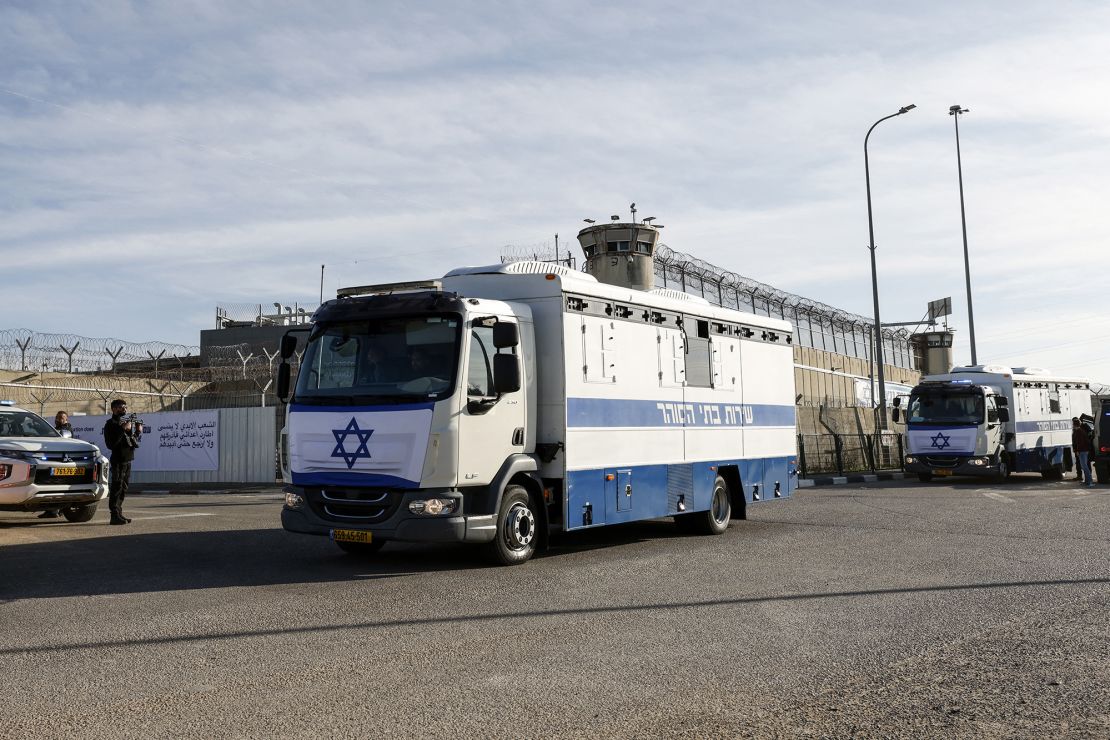
The Bosta Journey… The Mobile Tomb
Each time a Palestinian prisoner is transferred from one prison to another, to a court hearing, or even to a hospital, he is placed in an armoured metal vehicle known as the “Bosta.” The prisoners themselves, however, have given it a more fitting name: the journey of torment, or the mobile tomb.
This journey bears no resemblance to any ordinary transfer operation; it is a space in which the prisoner’s humanity is entirely stripped away. Throughout, he is treated as a body to be shackled and subdued.
Inside the Bosta, the most severe instruments of oppression converge: hands and feet bound in painful metal restraints, cramped cages that permit no movement, prolonged hours in exhausting positions, and complete deprivation of food, water, and rest. The transit cells encountered along the way differ from others only in that they are harsher, more overcrowded, and more neglected.
Released prisoner Alaa Daqqa recounts:
“The Bosta journey is harder than all the years of imprisonment combined… We are not treated as human beings, but as objects to be transported under guard; without mercy, without time, without air.”
“They would take me hours before dawn and return me after midnight, all for a court session lasting no more than a few minutes.”
First: The Vehicle of Torment
- A fully enclosed armoured vehicle, partitioned into iron cages that allow the prisoner neither movement nor a change in sitting position.
- The absence of ventilation and air conditioning renders the journey suffocating in summer and brutal in winter.
- The prisoner sits shackled in an inhumane position for periods that may extend to fifteen or twenty hours.
Second: Hours of Degrading Waiting in the “Ma’bar”
Before and after the journey, prisoners are held in transit stations known as the “Ma’bar”:
- Narrow, filthy cells without windows.
- Rest, sleep, and food are prohibited.
- Waiting periods extend for many hours and may exceed the duration of the journey itself.
Prisoners have recounted journeys lasting more than twenty hours between two prisons separated by only one hour of travel.
Third: Violations of Privacy and Dignity
- Prisoners are denied access to toilet facilities, and when permission is granted, it occurs in a degrading manner under strict surveillance.
- Being forced to hold their urine for extended hours causes serious health damage.
- Metal restraints cause wounds and swelling, particularly during long and repeated transfers.
Fourth: The Suffering of Women and Children
Female Palestinian Prisoners
- They are subjected to a complete absence of privacy.
- Some are transferred while injured or ill, without medical treatment.
- They are forced to sit for painful hours without cushions or support.
Child Prisoners
- They are transported in the same iron cages with the same restraints.
- They are subjected to shouting and intimidation, and at times physical assault.
- They are denied water and toilet access for extended hours.
Fifth: The Bosta as a Tool of Systematic Punishment
The Bosta is not merely a means of transport; it serves as a deliberate instrument of punishment:
- Repeated transfers without legal necessity.
- Some prisoners have been transferred more than five times within a single week.
- This results in physical exhaustion, sleep disorders, psychological breakdown, and the aggravation of injuries caused by prolonged restraint.
Sixth: The Legal Framework
Fourth Geneva Convention (1949)
The Occupying Power is obligated to:
- Respect the dignity of detainees during transfer.
- Ensure humane and sanitary conditions.
- Prohibit humiliation or punishment during transfer.
Nelson Mandela Rules – Rule 45
“The transport of prisoners shall be carried out in humane conditions that take into account their health and physical needs and protect them from any form of humiliation.”
Reports of International Organisations
Amnesty International and Human Rights Watch have classified these prisoner transport practices as:
- Cruel treatment
- Psychological and physical torture
- Grave violations of human rights
Conclusion
The “Bosta” stands as one of the most brutal instruments of repression within the Israeli detention system; it is a space where transfer becomes:
- Silent torture
- Systematic humiliation
- Psychological and physical attrition
What Palestinian prisoners endure during Bosta journeys necessitates:
- An independent international investigation
- Legal accountability for the responsible authorities
- Compelling Israel to provide means of transport that respect human dignity
Prisoners are not tortured only within their cells, but at every step of the administrative oppression that the occupation terms “security procedures”, while the prisoners see it for what it is: torment on wheels.