Testimonies of Female Prisoners Suffocating Behind Walls of Repression and Isolation
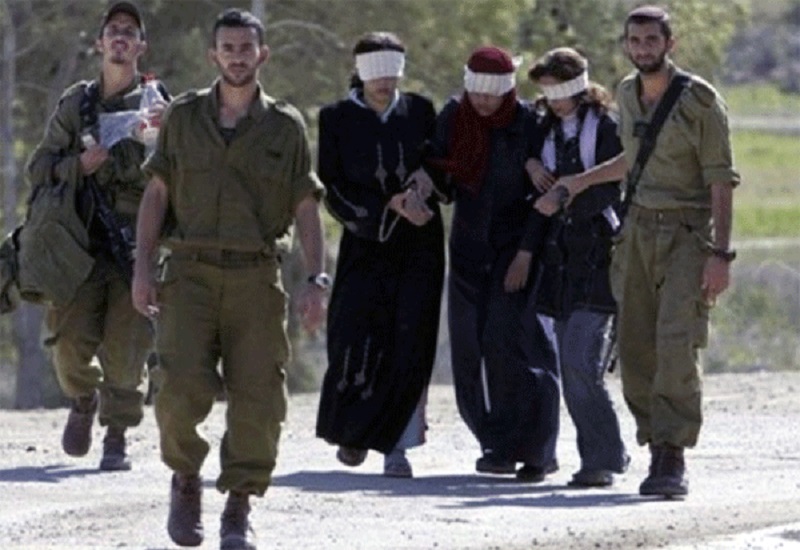
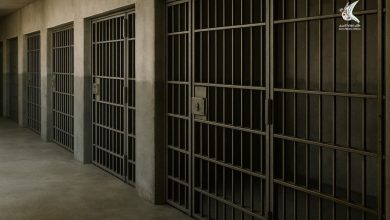
On the slopes of Mount Carmel, inside a crumbling prison complex, dozens of Palestinian women endure conditions that violate every standard of human detention. Al-Damoun Prison has become a site of systematic deprivation where cells function as cold tombs and abuse follows a daily routine that never stops. Despite the prison administration’s attempts to suppress information, testimonies from inside have emerged, documenting torture, medical neglect, and physical and psychological assault.
The System of Abuse
Every woman entering Al-Damoun faces forced strip searches during arrest and transfer, accompanied by explicit threats of rape and obscene language. Guards drag prisoners across floors, beat them on the head and abdomen, and forcibly remove their traditional dress and hijabs.
Pregnant women and sick prisoners receive medical examinations while shackled at the hands and feet, sometimes chained alongside police dogs. Pain goes untreated, medications remain undispensed, and women share their suffering from illness and hunger in overcrowded cells.
The prison denies all privacy. Cameras monitor cells continuously, bathroom doors don’t close, and guards maintain constant psychological pressure through threats and provocations. Women cannot see photographs of their children or receive any news except information designed to cause distress. The facility detains minors and pregnant women without consideration for age or condition, treating everyone as an enemy without rights.
Inside Al-Damoun
The prison itself is an old, deteriorating building plagued by dampness. Women live in narrow, overcrowded rooms without proper ventilation or lighting. They lack adequate clothing and blankets. Guards conduct violent raids using dogs and gas. The administration maintains a policy of isolation and systematic medical neglect, leaving mothers separated from their children and cut off from the outside world.
The Women Speak
Walaa Al-Salous describes sudden raids with degrading searches, prisoners being dragged and beaten, water sprayed into rooms, and arbitrary isolation. “The prison lacks basic necessities including clothing and hygiene items,” she says.
Iba’a Al-Aghbar reports that broken containers go unreplaced. Despite the deprivation of clothing, sanitary items, and medical care, she maintains: “It remains a prison, but we are stronger than them.”
Massa Ghazal witnessed eight raids in a single month. Guards forcibly removed one prisoner’s earrings, causing bleeding. Three prisoners sleep on the floor because there aren’t enough beds.
“From dawn, the screaming and cursing begins,” says Sireen Al-Sa’eedi. “Our lives are besieged by small details that the jailer turns into a battle.”
Aisha Al-Abayyat endured prolonged isolation before transfer to Al-Damoun, where “raids are our daily reality.” She confirms that prisoner Wala’a was denied treatment while shackled and bleeding.
Shahd Hassan describes unbearable conditions: “Recreation time is only fifteen minutes and includes bathroom time. On my birthday they raided our room and made us sit in the yard with the dogs.”
Tasneem Odeh was arrested for an old Facebook post and tortured during interrogation. She was transferred between prisons with strip searches, beatings, and neglect. She describes Al-Damoun as “closed, suffocating, overcrowded with 43 prisoners.”
Amani Al-Najjar reports a suffocating environment where women receive half a spoonful of yogurt each, contagious skin disease spreads unchecked, and recreation consists of minutes while shackled.
“Nothing resembles prison except itself,” says Shireen Al-Hamamreh. She recalls her mother’s farewell: “If the price of Ezzedine’s freedom is that I become a prisoner, I don’t care. I am strong. I am Ezzedine’s sister.”
Iman Al-Shawamreh describes suffocating humidity, constant banging on doors, and mockery from guards. “I want to embrace Youssef,” she says of her son.
“From the day I entered Al-Damoun, I have lived oppression,” states Dalal Halabi. “Even cleanliness is non-existent. Young girls use pieces of blankets instead of sanitary pads.”
Banan Abu Al-Haija confirms they live between humidity and mold, with pregnant women receiving no care. “Each raid leaves new scars.”
“The room is like a grave,” says Amal Al-Hajjawi. “The food is poor, medicine is forbidden, insults are always present.”
Maysoun Mashariqah describes overcrowded rooms, lack of clothing, and spreading skin diseases, yet adds: “We sew joy from the remnants of pain.”
Fatima Abdel Fattah confirms widespread skin allergies, loss of privacy, and absence of basic necessities amid medical negligence.
These testimonies represent a fraction of the accounts emerging from Al-Damoun. They document conditions that violate human dignity and expose an occupation that claims democracy while practicing severe oppression behind prison walls. Despite the humidity, darkness, and deprivation, the women prisoners maintain an unbreakable will, sending messages of steadfastness and hope while awaiting freedom.
The Prisoners’ Media Office states that the torture and humiliation detailed in these testimonies constitute systematic policy by the prison administration, part of a psychological and physical campaign to break Palestinian women’s will. The Office emphasizes that these continuing violations, met with international silence, obligate human rights institutions and official bodies to take urgent action. The occupation must be held accountable for its crimes, women prisoners must be protected, and the daily systematic oppression must end.