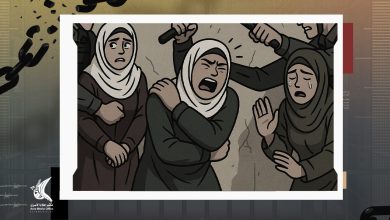
Imprisoned on Exam Day
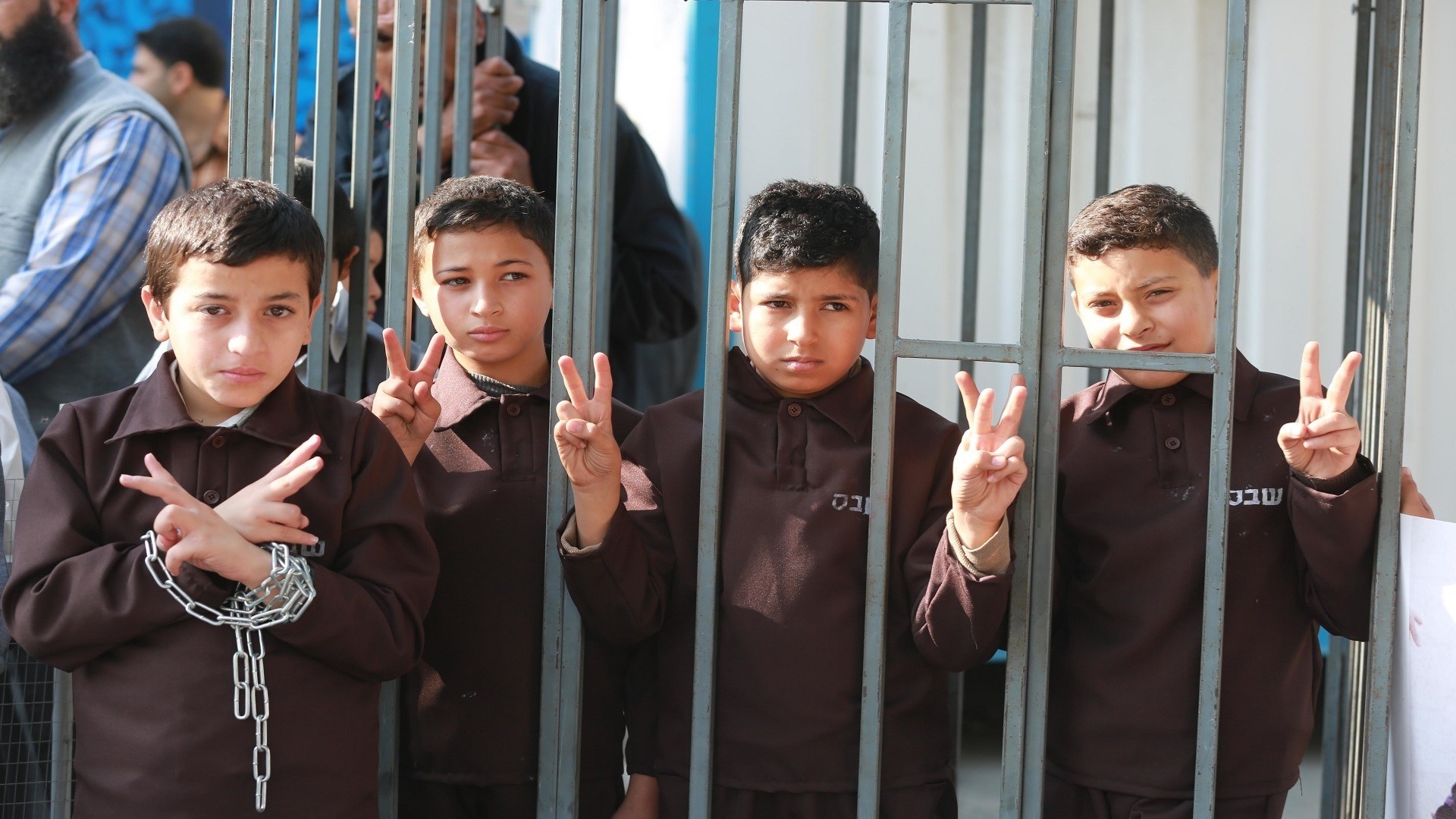
Sixty-five Palestinian students were barred from sitting their high school exams this year. They sat in Israeli prisons while their classmates filed into examination halls across the West Bank. They are among roughly 360 Palestinian children the occupation still holds. Most face no charge.
The exams, known as the Tawjihi, are a rite of passage everywhere else in the world, a right no one questions. Here the right is stripped away, and so are the children who hold it. Their families’ hopes go with them: a safe future, a settled life beyond the reach of the occupation.
These numbers leave out another group. Children arrested years ago, who crossed out of childhood while still inside, denied schooling for the whole length of their detention. Childhood left them behind bars. Their dreams stayed suspended. They never went back to their classrooms, and they never finished their education.
The Prisoners’ Media Office documents one of the gravest abuses the occupation inflicts on Palestinian children: arrest, and the denial of their right to learn and to sit the Tawjihi. The arrests reached children from every part of the country. Each one has a name, a story, and a right taken from him.
Muhammad Jamal Harroub, 17, comes from the town of Dura in Hebron. His arrest cost him this year’s exam, the one the rest of his generation sat. “Praise God in all circumstances. We believe that in every evil God creates there is good, and that God has wisdom in everything, and we accept His ruling and His decree,” his mother says. “Our hearts grieve, yes, but we surrender our affairs to God.”
Muhammad has been held since May 10, 2025. He is kept from his education and held in administrative detention, waiting to go free and return to his desk. He has served a full year under that order and begun a second. His freedom is still suspended, his childhood passing in the juveniles’ section of Ofer prison.
His mother says his dreams outrun his years. He loves learning, he loves public speaking, and despite his age he wrote a book and was waiting to publish it. His dream of studying chemistry now waits too, until he is free and back at the desk he was forced to leave.
Ayoub Yahya Eshtayyeh, 18, from the village of Salem in Nablus, was getting ready for the exams before his arrest on October 31, 2024. His continued detention took that from him. He should be at his desk today. Under the occupation’s own laws he has aged out of childhood, but he remains his family’s child, and everyone is waiting for him to return to his dreams. He sits today in Naqab prison under an administrative detention order renewed four times.
Ahmad Abd al-Aziz was getting ready for the Tawjihi with a single goal in front of him: pass and enter the college of interior design, turning his passion for carpentry into the future he had long imagined. A student at the industrial school in Tulkarm, specializing in carpentry and decor, Ahmad was arrested on November 10, 2025, from the Nur Shams camp. An administrative detention order was issued against him without any charge. He sits behind bars now while his classmates carry on, studying for their exams. His arrest has stalled all of it.
The occupation is also keeping two more students, Yousef Ma’ali and Islam Bani Shamsa, from sitting the Tawjihi. Their absence from the examination halls cost them an academic milestone they had spent years working toward. Their seats stayed empty, an image of what imprisoned students endure and the schooling stripped from them.
Nada Iyad Odeh, 17, from the town of Tammun in Tubas, is one of the youngest prisoners in Damon prison and barred from her exams this year. “Nada was first in her track, and the fire in my heart will not go out,” her mother says. “The heartbreak walks with me as the Tawjihi students head to their exams, but we believe everything God decrees is good.” Nada was arrested from her home on February 12, 2026, and remains in detention. A student in the literary track, she could not finish the second semester. She dreamed of placing first in Tubas. The occupation stole that dream.
Sally Muhammad Odeh, 18, from the village of al-Midya in Ramallah, held since January 5, 2025, is likewise barred from the exams. “Sally has been in detention for a year and seven months, and she was supposed to sit the Tawjihi today with her classmates, but today she is a hostage in Damon prison,” her mother says. “Praise God in all circumstances. The joy of my life is gone, and God alone knows my state. Sally was in the scientific track, and she dreams of becoming a doctor, but the occupation took that right from her.”
Hana Naim Hammad, 18, from the Arroub camp in Hebron, has been held in administrative detention since June 9, 2025, and is kept from her exams today. Her mother wrote: “I wished I could see my daughter leave the house for the Tawjihi exam, asking me to pray for her and to be pleased with her.”
Both Sally and Hana were still eleventh-grade students when they were arrested. Their pens and textbooks were traded for court rulings and postponed release dates, while they live through repression and abuse inside Damon prison.
In a house in Hebron, the mother of Osama Muhammad al-Ja’abari, 17, did not sleep. She kept summoning the scene she should have lived that morning, sending her son off to the Tawjihi exam, before his arrest came between him and his desk. “Osama is my firstborn, my first joy. I couldn’t sleep the night of the exam, but I believe God chose what is good for him,” she tells the Prisoners’ Media Office. “Osama studies in the Sharia track. He was arrested on April 7, 2025, and he is held under an administrative detention order renewed three times. He is held in the juveniles’ section of Megiddo prison, and I learned from juvenile prisoners released from the section that he caught scabies and was put in isolation.”
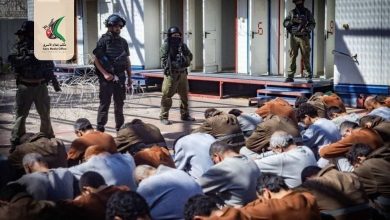
Palestinian childhood is being stolen in full view of the world. As what the occupation authorities call a “state of emergency” continues inside the prisons, prisoners have been denied their right to education and to sit exams, and every level of schooling has stopped. For years the prisoners fought for that right through battles and hunger strikes and won it. Since October 7 it has been taken away completely, and books, papers, pens, and everything that might keep a prisoner connected to learning or to the outside world have been confiscated.
The dreams of 65 students were put on hold today. Hundreds of Palestinian children sit behind bars with no desks and no right to learn, and 65 of them were kept even from sitting the Tawjihi. In the juveniles’ sections of Megiddo and Ofer, children fight hunger and repression. Many of them may not know their exams have begun, that their classmates have started sketching the shape of their futures, while their own stays hostage to cells, sentences, and administrative detention orders.