Jerusalem Journalist Bayan al-Juba: A Stark Case of House Arrest as Punishment
Jerusalem’s Palestinian residents face a relentless array of punitive measures imposed by the Israeli occupation, all designed to exhaust them and engineer harsh security, economic, and living conditions. The goal is to pressure Palestinians into leaving and fulfill the occupation’s ambition of emptying Jerusalem of its native population, through intensified harassment including arrests, house arrest, forced displacement, home demolitions, and other restrictive policies.
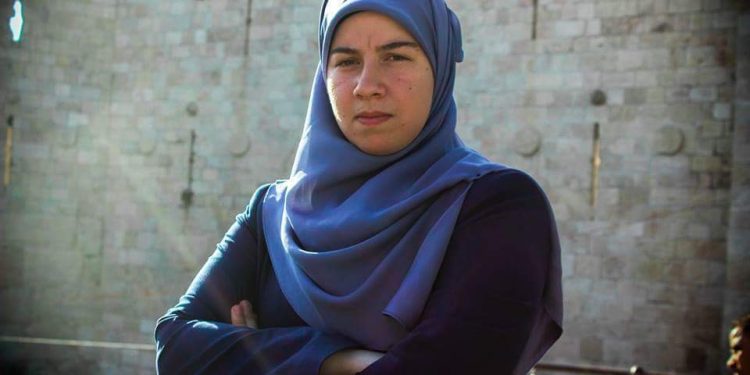
House arrest is a cruel tool the occupation uses to tear apart the social fabric of Jerusalem’s communities, creating an perverse dynamic in which families become their own children’s jailers out of fear of further reprisals. The case of journalist Bayan al-Juba stands as one of the starkest examples. She has been confined to her home in Shufat refugee camp in Jerusalem for over a year.
Al-Juba is a mother of three. Her oldest child is 8 years old; her youngest is 10 months. Since the house arrest order was imposed, severe restrictions have governed her movement, her freedom, and her work as a journalist. Her ordeal began in February 2025, when Israeli forces arrested her at Al-Aqsa Mosque just hours before the start of Ramadan. She was there with her two children and her husband. After hours of interrogation, she was released under house arrest. At the time, she was in her final months of pregnancy and in poor health.
She gave birth during her confinement. She named the baby Yazan. She could not leave the house to buy him clothes or supplies appropriate for a newborn.
Israeli authorities recently allowed al-Juba limited time outside the home, but imposed strict conditions barring her from using social media or conducting any journalistic interviews, pending her court hearing and sentencing.
Days ago, an Israeli court postponed al-Juba’s trial to May 10, 2026, pending a meeting with a so-called “behavior officer” and the submission of his report. The military prosecution had filed an indictment against her in March 2025, one month after her arrest. The indictment contained multiple charges, but they all revolved around a single accusation: “incitement” through social media and support for Palestinian organizations. Her case file included extensive documentation, mostly journalistic and news posts on Facebook and Instagram spanning five years. The occupation treated any opinion she expressed in support of her people or their cause as “incitement.” Photographs of her inside Al-Aqsa Mosque were also included as part of the indictment.
The consequences of house arrest have not been limited to al-Juba herself. They have reached her children, particularly Yazan, born during her confinement. Israeli authorities refused to register him on the family’s identity card, claiming the family resides in al-Ram in the occupied West Bank, despite the fact that the occupation itself ordered her to serve her house arrest at the family home in Jerusalem. As a result, the infant has been denied health insurance and basic medical services, including vaccinations, despite his urgent need for them.
Over the past several years, Israeli occupation authorities have issued hundreds of house arrest orders against Jerusalem’s Palestinian residents. In the past year alone, they issued more than 60 such orders as a form of collective punishment and harassment, alongside roughly 290 orders banning Palestinians from Al-Aqsa Mosque and the Old City.
Occupation forces also targeted Jerusalem’s residents with arrests and punitive measures, detaining 770 Palestinians from Jerusalem over the past year, including 21 women and 82 children, according to a report by the Palestine Center for Prisoner Studies.