A Death Certificate for a Living Female Prisoner
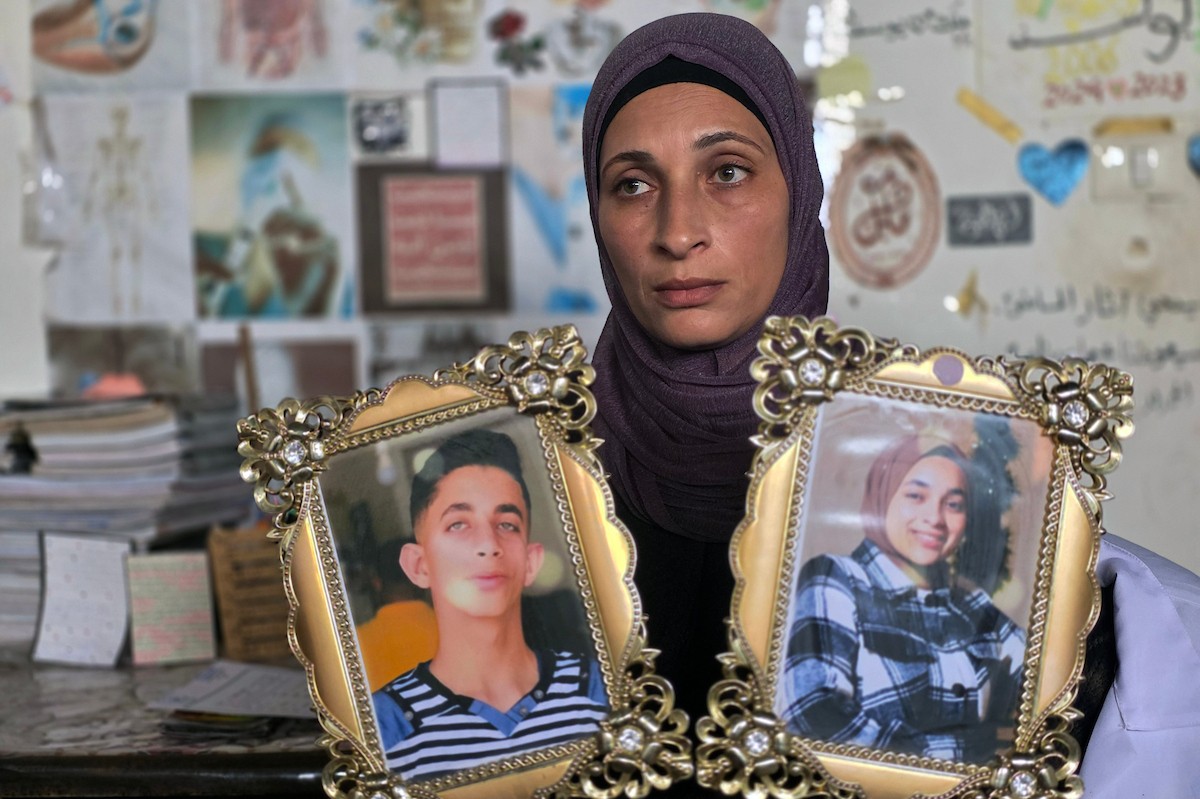
In the heart of the “Japanese Neighborhood” west of Khan Younis, where the smell of ash still mingles with bullet traces, Tahrir Abu Madi stands before the partially rebuilt rubble of her home. In her hand she holds an official document titled “Death Certificate,” issued for her daughter Malak. The bitter reality tells her something else: her daughter is still breathing behind the bars of occupation prisons.
The Crime Scene
The tragedy dates to February 2024, when Malak Abu Madi, a nursing student who dreamed of treating the wounded, went to her family’s home to collect some personal belongings. In those moments, occupation forces stormed the area and turned the house into what has been described as a “compound crime” scene.
“They burned everyone inside the house to erase what happened,” her grieving mother says. Malak was not alone. Four of her relatives were there. Family testimony confirms that occupation forces executed them while their hands were bound, then set fire to the bodies and the house in an attempt to conceal the atrocity.
Dead on Paper, a Prisoner in Reality
For months, Tahrir lived believing her daughter had been killed. She obtained an official death certificate based on the evidence on the ground and the complete severing of all contact with Malak.
The shock came months later, when information leaked from inside occupation prisons confirmed that Malak was still alive.
“How can a death certificate exist alongside shackles?” her mother asks. She lives torn between the relief that her daughter survived and the agony of knowing she is in the hands of her jailers, with a total blackout on her health and the conditions of her detention.
A “Compound Crime” and an Unknown Fate
The Abu Madi family’s tragedy does not end with Malak. The crime committed inside the home involved the field execution of four family members while they were bound, the deliberate incineration of their bodies to destroy evidence of gunfire and restraints, and enforced disappearance. The fate of Tahrir’s son Yousef remains unknown: he is neither among the living whose whereabouts are known nor among the dead whose bodies have been buried.
The Reality of Gaza’s Missing
Malak’s case represents hundreds of similar cases across the Gaza Strip, where the occupation practices a policy of deliberate information suppression. According to human rights organizations, hundreds of Palestinians who were declared dead or went missing in areas of military incursion were later found to be held under enforced disappearance in camps such as Sde Teiman or Negev prisons, with neither the Red Cross nor any international body notified.
The Prisoners’ Media Office confirms that Malak Abu Madi’s case reflects the enforced disappearance and disinformation policy the occupation practices against Gaza detainees, constituting a flagrant violation of international law and human rights. The office calls on international institutions and the Red Cross to immediately reveal the fate of all prisoners and guarantee their communication with their families.